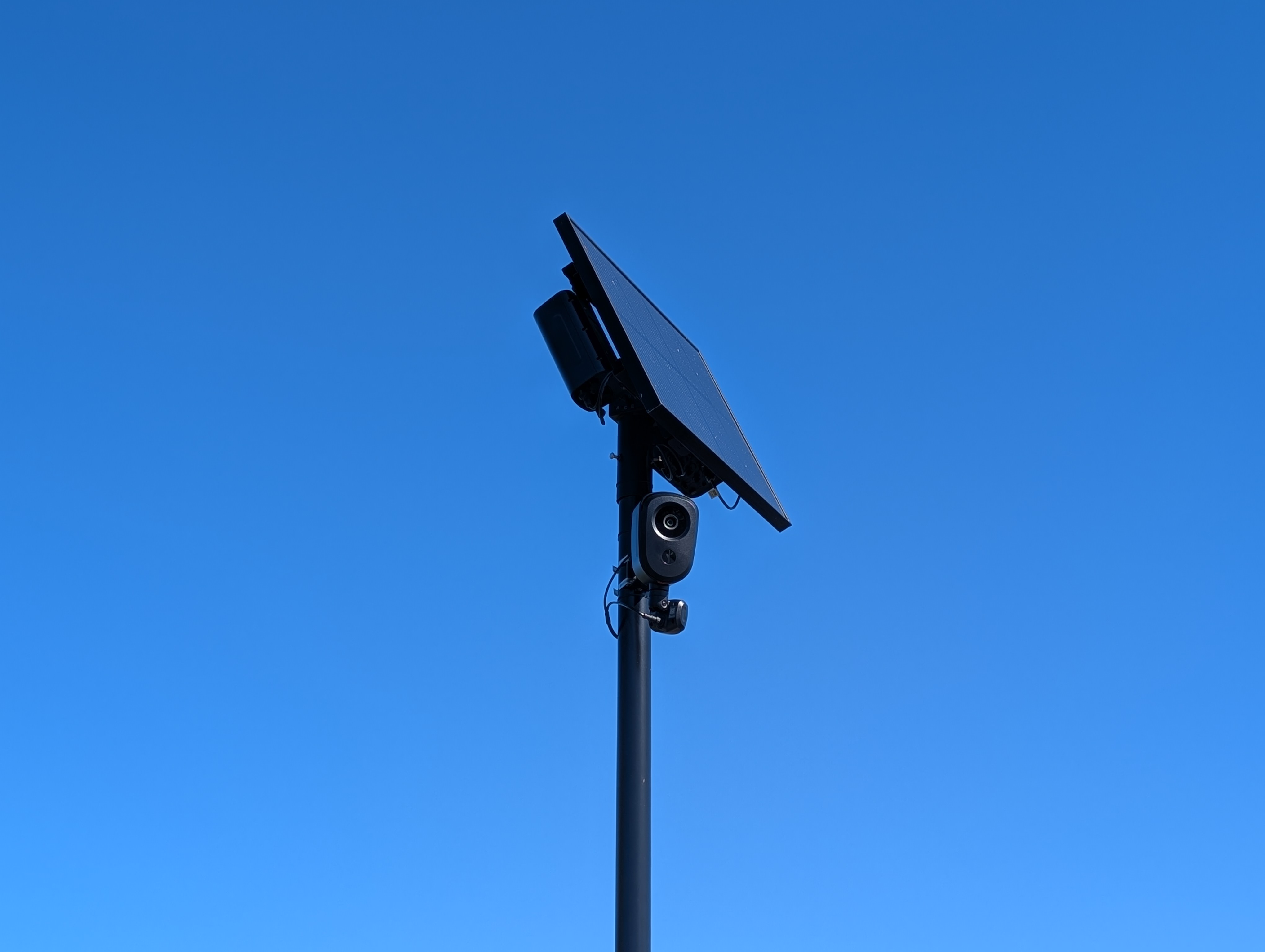
Wilmette homeowners who drive past any of the village's 22 license plate cameras could see those devices stay or go after the Village Board of Trustees votes on a proposed three-year contract renewal Nov. 10.
The current agreement with Flock Safety, the company that leases the Automated License Plate Reader (ALPR) units to the village, expires in December 2026. Police Chief Michael Robinson recommended extending the deal at a Sept. 10 Public Safety Committee meeting, according to committee minutes. But several Wilmette residents showed up to push back.
The cameras photograph rear license plates and record the date, time and location of each image. They do not use facial recognition, and the village says they do not capture images of drivers or passengers, according to the village's ALPR information page. Data is deleted after 30 days unless tied to a criminal investigation.
That was not enough to satisfy opponents at the Sept. 10 hearing.
Michael Tobin, a Wilmette resident, questioned whether the program's effectiveness had been proven with statistics rather than anecdotes. He urged the committee to review crime data before deciding. Cindy Fey, also of Wilmette, raised concerns about personal privacy, surveillance and what she called the potential for disproportionate monitoring of certain neighborhoods. Karen Isacson, another Wilmette resident, acknowledged the village's transparency efforts but said the program's public safety benefits did not justify the privacy risks.
Robinson told the committee the cameras help officers track vehicles tied to criminal activity without high-risk pursuits. He described a case in which ALPR data helped officers locate a stolen landscaping trailer within about an hour. He also said roughly 580 stolen-vehicle alerts recorded in 2025 represented multiple camera detections, not 580 separate stolen vehicles.
Corporation Counsel Jeff Stein told the committee that Illinois law, effective Jan. 1, 2024, restricts the sale of ALPR data to third parties. The village's contract with Flock Safety also prohibits it. Stein said only five outside law enforcement agencies have signed memoranda of understanding to access Wilmette's data, and no federal agencies or agencies outside Illinois have received it.
Trustee Michael Lieber laid out three questions he said should guide the decision: whether the cameras infringe on individual privacy rights, whether adequate safeguards exist, and whether the program's effectiveness justifies the cost. The program's 2026 budget is $55,000, projected to rise to $67,500 by 2029.
The committee continued its review at an Oct. 19 meeting. The outcome of that session has not been published in available minutes.
Wilmette is not alone in wrestling with Flock cameras. Neighboring Winnetka proposed shortening its data retention from 30 days to seven, The Record reported in October. Skokie launched a comprehensive review of its Flock program after residents packed a September board meeting, the Chicago Tribune reported. Evanston is the only North Shore municipality to have banned the cameras entirely, according to the Tribune.
The Wilmette Village Board meets at 7 p.m. on Tuesday, Nov. 10, at Village Hall, 1200 Wilmette Ave.