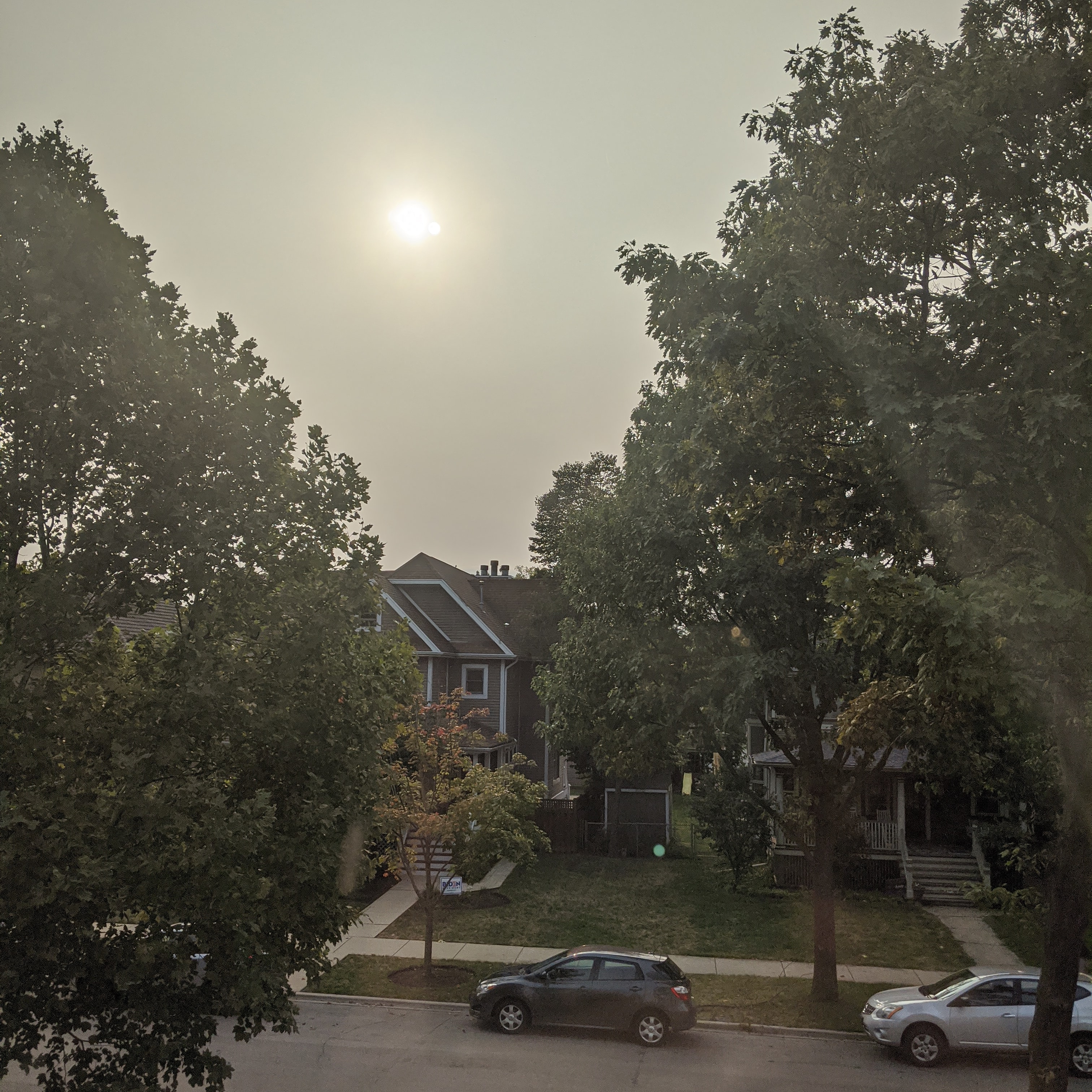
Wilmette and Winnetka recorded air quality readings of 565 on Thursday, July 16, worse than anywhere else in the Chicago region and well beyond the standard 500-point AQI scale, according to the Chicago Tribune's air quality map. Wildfire experts say the smoke could keep returning through October.
More than 900 wildfires are burning across Canada as of Tuesday, July 21, with more than 7 million acres burned since January, according to the Canadian Interagency Forest Fire Centre. At least 40 new fires started Sunday, July 19, alone, many in western Ontario classified as "out of control." At least 19 fires in Minnesota are also pushing smoke toward Illinois.
The immediate crisis forced the Wilmette Park District to close Gillson Park beach, Centennial Family Aquatic Center, and all lakefront facilities on Thursday, July 16. The Winnetka and Glencoe park districts shut their beaches the same day. The Chicago Botanic Garden in Glencoe closed. The Village of Wilmette canceled its Sounds of Summer concert on the Village Green.
PM2.5 concentrations in the North Shore suburbs reached levels the Chicago Tribune reported as equivalent to an AQI above 900 Thursday night, well beyond the standard 500-point scale, before dropping to 465 by Friday morning, July 17, according to AirNow. Cook County set a new PM2.5 record that day, the Tribune reported. Any reading above 300 represents what AirNow calls a "health warning of emergency conditions."
By Monday, July 20, conditions had improved enough for the Wilmette Park District to resume all outdoor activities and operations, according to its air quality alert page. Scott Baker, observation program leader with the National Weather Service's Chicago office, said Monday that conditions were "still a little unhealthy out there, but not as bad as it was last week."
The improvement may not last.
"Some of these fires in the boreal forest, they don't end until the rain hits," said Craig Clements, director of the Wildfire Interdisciplinary Research Center in San Jose, California, in an interview published by the Chicago Tribune on Monday. Clements said rain might not arrive until October or November. Even if Canadian fires are controlled, he said, smoke from fires in Idaho or Washington could reach the Midwest in August.
Jonathan Overpeck, dean of the School for Environment and Sustainability at the University of Michigan, told the Tribune that climate change is intensifying fire seasons and that large wildfires could begin breaking out in the Midwest within the next decade if the climate is not stabilized.
What residents should do
The Illinois EPA recommends limiting physical activity outdoors when AQI exceeds 150 and closing windows and doors during smoke events. Sensitive groups, including people with heart or lung disease, older adults, teens and children, should avoid all outdoor physical activity when AQI exceeds 100, according to the American Lung Association.
PM2.5 particles can settle deep in the lungs and cross into the bloodstream. Prolonged exposure is linked to increased risk of heart attacks, stroke, respiratory illness and developmental disorders in children.
Residents can monitor real-time conditions at AirNow.gov. The Wilmette Park District posts operational changes at wilmettepark.org/air-quality-alert/. No North Shore park district has announced formal protocols for how it will handle repeated smoke events through the fall; none responded to requests for comment on forward-looking plans.
North Shore government week ahead
Tuesday, July 21 — Winnetka Village Board meeting. The board is scheduled to vote on an ordinance banning short-term rentals shorter than 60 days. Agenda available at winnetka.org.
Friday, July 24 — Glencoe beach parking task force applications due. The joint Village-Park District task force will study congestion along Park Avenue near Glencoe Beach. Nine resident seats are available.