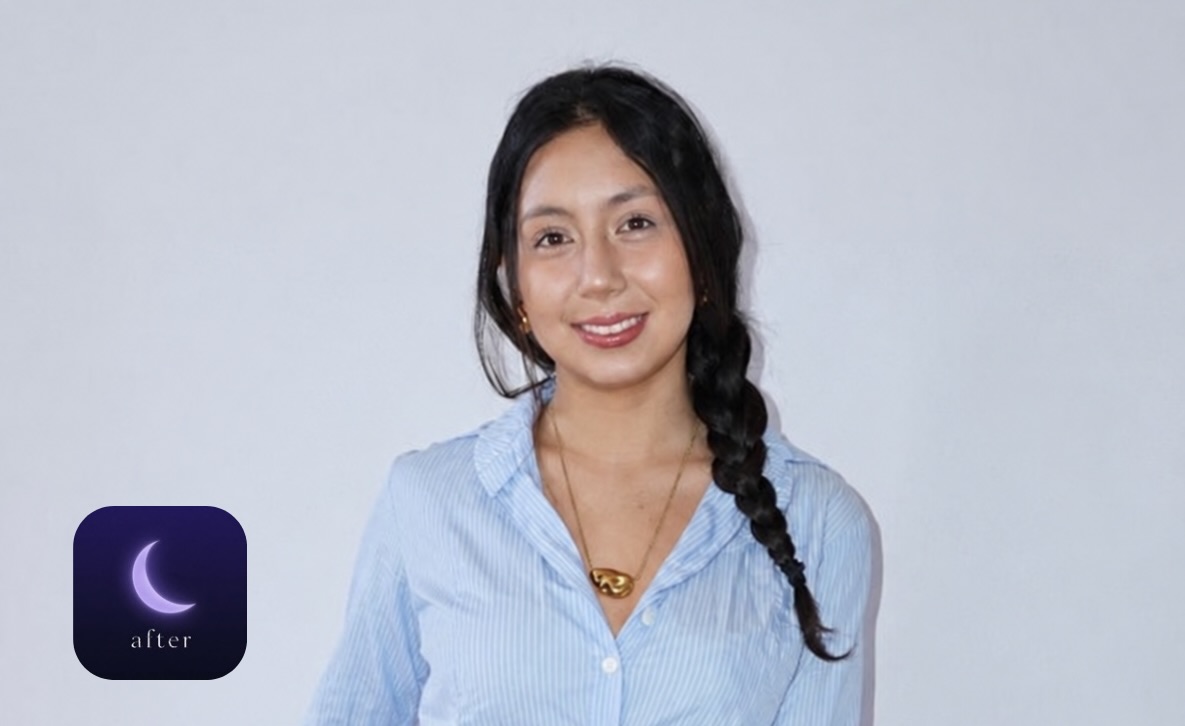
A Wilmette native studying at MIT turned her own breakup into an iPhone app that has drawn more than 1,700 users since July.
Ashley Geohas, a New Trier High School graduate studying finance and materials science engineering, launched After: Breakup Recovery on the App Store. She built it alone, teaching herself coding, design and marketing along the way.
"Everyone told me that time would heal all wounds, but no one really told me what to do with that time," Geohas told North Shore Weekly.
How it works
After is built around the moments when moving on feels hardest. Its Draft Interceptor lets users type out a message to an ex without sending it. The app then surfaces one of the user's own saved "receipts," a reason the relationship ended, and asks whether anything has changed before they hit send.
Other features include Anchor, which notifies a trusted friend if the user breaks no-contact, and a Night Wall that activates between midnight and 4 a.m. with a breathing exercise and journal prompts. Users can also quarantine triggering songs and photos, write letters to their future selves and build a goals scrapbook.
Personal experience behind every feature
Geohas said her own breakup drove the app's design. She used to handwrite letters to herself to open on hard nights. Friends had her list reasons the relationship wasn't right. She struggled to ask for support when she needed it. Each of those experiences became a feature in After.
Privacy is central to the app. According to its App Store listing, almost everything users write stays on their device and is never seen, sold or shared by the developer.
Harvard and MIT support
Geohas pitched at the Harvard/MIT Startup Pitch Weekend, co-hosted by the Harvard Law Entrepreneurship Project and the Harvard Undergraduate Venture Capital Group. She advanced through an initial application round, then pitched twice more before being accepted into the HLEP cohort. The project provides pro bono legal research and analysis to entrepreneurs in the Harvard and MIT community. Geohas said HLEP is helping her secure a trademark, incorporate the company and strengthen the app's privacy policy.
She is also receiving mentorship through MIT's Venture Mentoring Service, which has supported more than 3,500 ventures since 2000, and has applied to several startup accelerators.
What's next
Geohas is planning campus pop-up booths where students can write the text they won't send, swap a triggering song for a healing one and choose a friend as their anchor. She is partnering with TikTok creators and podcasters who cover breakups and healing to grow the app's reach.
Inside After, she is building an AI companion that surfaces users' own saved journal entries and receipts instead of offering generic advice. The companion will not save conversations, and what it remembers is stored on the user's phone.